Showing posts with label Historical. Show all posts

Thursday, October 21, 2010

Taman Sari Water Castle, Yogyakarta


Taman Sari Water Palace is a palace site that is actually comprised of several buildings (not all buildings are located in water) and its location is still in the Yogyakarta Palace. In English, better known by the name "Perfume Garden" or "Fragrant Garden", because many fragrant flowers planted this garden environment. Taman Sari - Yogyakarta is not just a recreational park royal family in those days, but it has various functions such as Camouflage area against its enemies, and is a bastion system, while also as a place of meditation for the Kings, where making batik conducted by the concubines of King and the daughters of King, a military training ground for the royal army and there's more.


Taman Sari, Yogyakarta was founded in 1758 that the idea was originally from Prince Mangkubumi (later titled Hamengku Buwono I) and Raden Ronggo Prawirosentiko (Major of Madiun) as an architect, while Demang Tegis (Portuguese who earned his degree from the kingdom) as a structural expert .

Monday, October 18, 2010

Yogyakarta Palace, Yogyakarta

Yogyakarta Palace was built in 1756 AD or the year 1682 in Javanese calendar by Prince Mangkubumi Sukowati who then called as Sri Sultan Hamengku Buwono I. After going through a long struggle between 1747-1755 which ended with the Gianti Agreement.


Before occupying Kraton current,
Sri Sultan Hamengku Buwono I or "Sri Sultan Hemengku Buwono Senopati Ingalogo Ngabdulrahman Sayidin Panotogomo Kalifatullah" lived in Amber Ketawang Gamping, Sleman. Five kilometers west of Yogyakarta Palace.

From Amber Ketawang, His Excellency determine the capital of Mataram Kingdom in the Village Pacetokan. A region that is flanked by two rivers streams, Winongo
and Code. This location is in an imaginary line of the South Seas, Krapyak, Yogyakarta Palace, and Mount Merapi.

Saturday, October 16, 2010

Jam Gadang (Clock Tower), Bukit Tinggi, Sumatera

It is a typical symbols of Bukit Tinggi West Sumatra and it has a story and the uniqueness in the course of history. This can be traced from the ornament on the Clock Tower. In the Dutch colonial period, this hour-shaped ornament and on it stands a statue of a rooster.


During the Japanese colonialism, the clock ornament turned into a pagoda ornament. While in the period after independence day, the shape ornament changed
again to the shape Gonjong Minangkabau traditional house.

Friday, October 15, 2010

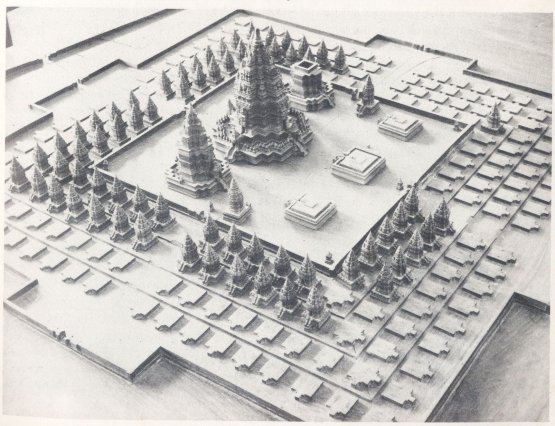
Prambanan Temple, Yogyakarta

Prambanan is a stunningly beautiful building which is built in the 10th century during the reign of two kings, Rakai Pikatan and Rakai Balitung. Rose as high as 47 meters (5 meters higher than Borobudur Temple), the foundation of this temple has fulfilled the desire to show Hindu triumph in the land of Java. This temple is located 17 kilometers from the city center, in the middle of an area that now functions as beautiful park.


There is a legend that Javanese people always tell about this temple. Once, a man named Bandung Bondowoso loved Roro Jonggrang. Because of his love, Jonggrang asked Bondowoso make 1000 temples with statues in one night. The request was nearly fulfilled, when Jonggrang asked the villagers to pound rice and make a big fire that created an atmosphere like the morning. Bondowoso who only completed 999 statues cursed Jonggrang be a statue of the 1000 because he felt cheated.

Thursday, October 7, 2010

Borobudur Temple, Central Java

Who does not know Borobudur? This Buddhist temple has 1460 relief panels and 504 Buddha effigies in its complex. Millions of people are eager to visit this building as one of the World Wonder Heritages. It is not surprising since architecturally and functionally, as the place for Buddhists to say their prayer, Borobudur is attractive.


Borobudur was built by King Samaratungga, one of the kings of Old Mataram Kingdom, the descendant of Sailendra dynasty. Based on Kayumwungan inscription, an Indonesian named Hudaya Kandahjaya revealed that Borobudur was a place for praying that was completed to be built on 26 May 824, almost one hundred years from the time the construction was begun. The name of Borobudur, as some people say, means a mountain having terraces (budhara), while other says that Borobudur means monastery on the high place.